

Introduction
If you have been exploring health and fitness trends recently, you have likely heard about the Ketogenic Diet (or simply “Keto”). It seems like everyone—from Hollywood celebrities to your neighbor—is talking about eating bacon, butter, and avocado to lose weight.
But is it too good to be true? Is a high-fat diet actually healthy?
The short answer is: Yes, if you do it right.
The Keto diet is not just another fad. It is a metabolic state that changes how your body fuels itself. For millions of people, it has been the key to unlocking rapid weight loss, improved mental clarity, and stable energy levels.
However, transitioning from burning sugar to burning fat is a biological process. If you don’t understand the mechanics, you might fail before you see results.
At Healthy.Azonpickr, we believe in the science of nutrition. In this guide, we will break down the Keto diet into simple, actionable steps, separating fact from fiction so you can start your journey with confidence.
What is the Ketogenic Diet?
To understand Keto, you need to understand how your body gets energy.
Normally, our bodies run on Glucose (blood sugar). When you eat carbohydrates (bread, pasta, sugar), your body breaks them down into glucose. Insulin is released to shuttle this glucose into your cells, and any excess is stored as fat.
The Ketogenic Diet flips this switch. By drastically reducing your carbohydrate intake and replacing it with healthy fats, you deprive your body of glucose.
Once glucose is gone, your liver begins to break down stored fat into molecules called Ketones. This metabolic state is called Ketosis. When you are in Ketosis, your body becomes incredibly efficient at burning fat for fuel—both the fat you eat and the fat you have stored on your body.
In short:
- Standard Diet: Burn Glucose (Carbs) -> Store Fat.
- Keto Diet: Burn Fat -> Use Ketones as Energy.
The Rules of Keto: Understanding Your Macros
Success on Keto depends on hitting specific macronutrient ratios. You cannot just eat greasy food and expect results. You need balance.
The Standard Keto Breakdown:
- Fats (70-75%): The bulk of your calories. (Avocados, olive oil, butter, coconut oil, nuts).
- Protein (20-25%): Essential for muscle. (Meat, fish, eggs, cheese).
- Carbohydrates (5-10%): To stay in Ketosis, you typically need to eat under 20-50 grams of Net Carbs per day.
What are “Net Carbs”? Not all carbs count the same. Fiber is a carbohydrate that your body cannot digest. Therefore, you subtract the fiber from the total carbohydrates to get the “Net Carbs.”
Formula: Total Carbs – Fiber = Net Carbs
The Keto Food List: What to Eat and What to Avoid
One of the hardest parts of starting Keto is knowing what to put on your plate. Here is your cheat sheet.
Foods to Eat (Enjoy Freely)
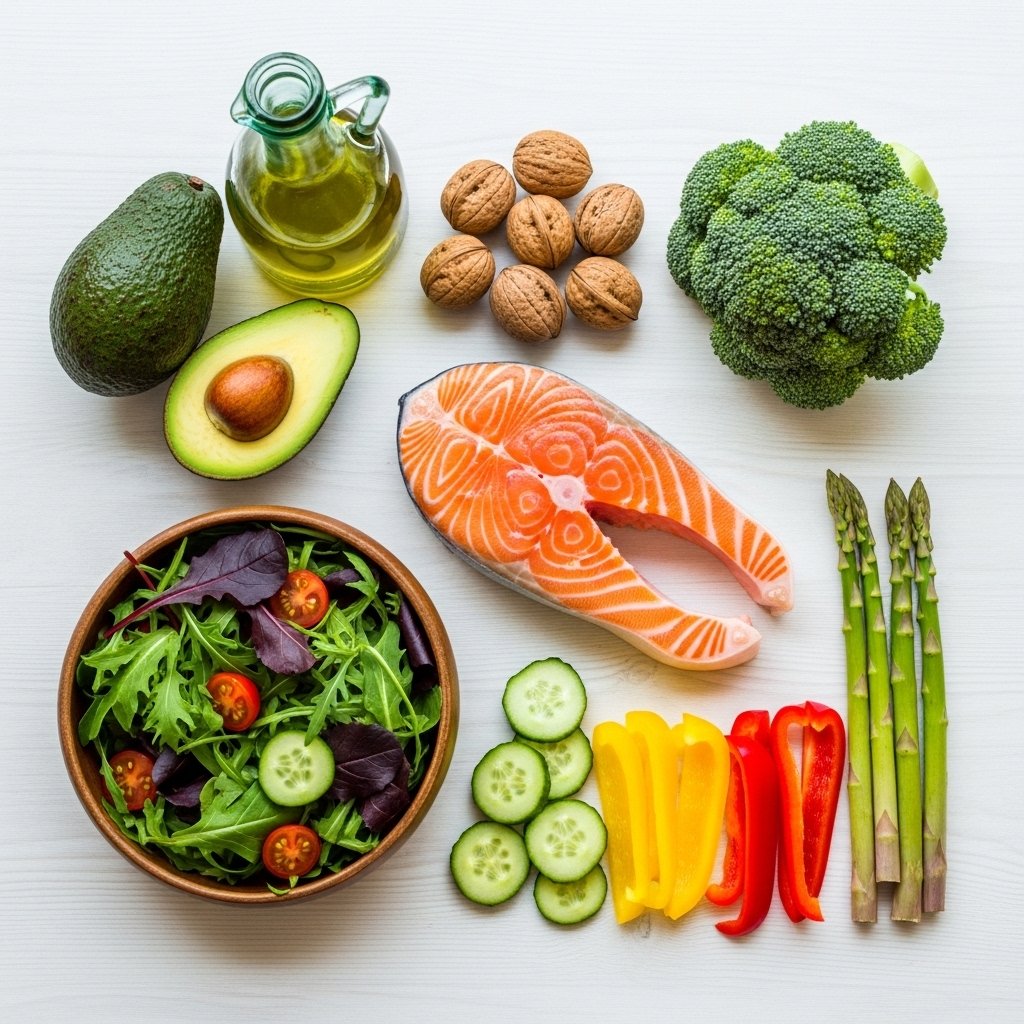
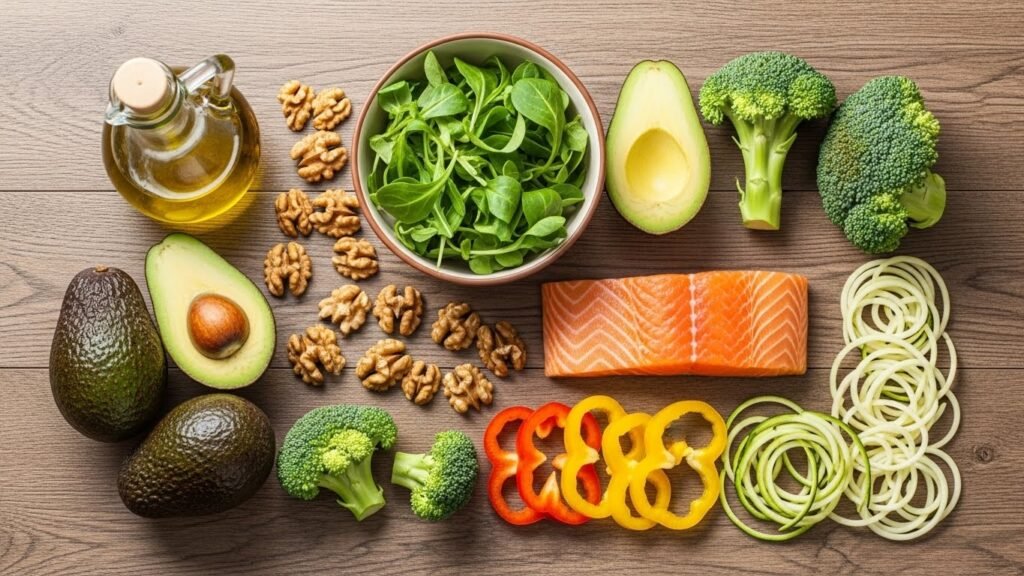
- Healthy Fats & Oils: Olive oil, coconut oil, MCT oil, butter, ghee, avocado oil.
- Proteins: Grass-fed beef, chicken thighs, turkey, fish (salmon, tuna), eggs, full-fat cheese.
- Vegetables (Low Carb): Spinach, kale, broccoli, cauliflower, zucchini, cucumbers, peppers, asparagus.
- Nuts and Seeds: Almonds, walnuts, chia seeds, flax seeds, pumpkin seeds.
- Beverages: Water, black coffee, unsweetened tea, sparkling water.
Foods to Strictly Avoid (The Carb Traps)
- Grains: Wheat, rice, pasta, cereal, oats.
- Sugar: Honey, agave, maple syrup, candy, soda.
- Fruit: Most fruits are too high in sugar. Limit berries (strawberries, raspberries) in moderation. Avoid apples, bananas, and grapes.
- Starchy Vegetables: Potatoes, sweet potatoes, corn.
- Legumes: Beans, lentils, chickpeas (too high in carbs).
Check out our list of the best low-carb snacks to stay on track
The “Keto Flu”: Surviving the Transition
When you cut carbs, your body flushes out water along with electrolytes. This often leads to a temporary condition known as the Keto Flu. It usually happens within the first week.
Symptoms:
- Headaches
- Fatigue or dizziness
- Nausea
- Irritability
- Brain fog
How to Fix It (Crucial Advice): The Keto Flu is not the flu; it is an electrolyte imbalance. You can prevent it instantly by replenishing your salts:
- Sodium: Don’t be afraid to salt your food.
- Potassium: Eat avocados or supplement with potassium citrate.
- Magnesium: Take a magnesium supplement (glycinate is best for absorption) before bed.
- Water: Drink tons of water.
Once you replenish these, the symptoms usually vanish within 24 hours, and the energy rush follows.
A Sample Day of Keto Eating
What does a Keto day actually look like? Here is a simple, delicious meal plan.
Breakfast: The Power Bowl
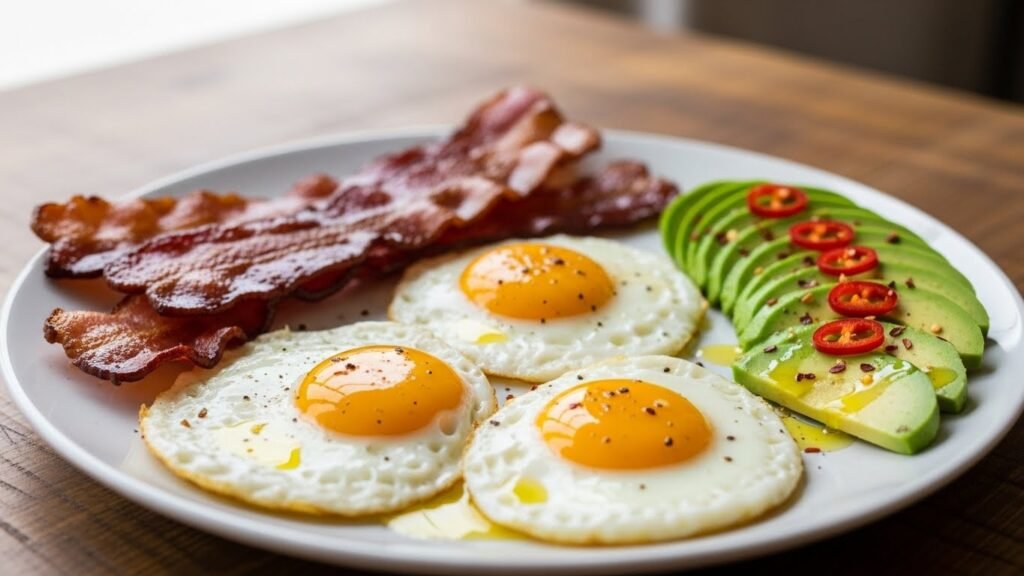
- 2 Eggs scrambled in butter.
- 2 slices of bacon.
- Half an avocado.
- Black coffee or herbal tea.
Lunch: The Salad
- Grilled chicken breast.
- Mixed greens (spinach/arugula).
- 1/2 avocado.
- Dressing: Olive oil and lemon juice (or a full-fat ranch/sugar-free dressing).
Dinner: Fatty Fish & Veggies
- 6oz Baked Salmon (rich in Omega-3s).
- Steamed broccoli with melted butter.
- Cauliflower mash.
Snack (if needed):
- Handful of macadamia nuts or a cheese stick.
Keto and Intermittent Fasting: The Dynamic Duo
Once you are adapted to Keto (usually after 2-4 weeks), you will notice your hunger naturally decreases. This is the perfect time to introduce Intermittent Fasting (IF).
IF is not a diet; it’s an eating pattern. The most popular method is 16:8 (fast for 16 hours, eat in an 8-hour window).
- Since your body is already burning fat, fasting allows you to accelerate that process.
- Skipping breakfast is the easiest way to start IF on Keto. Just drink coffee in the morning and break your fast at 12:00 PM.
Common Keto Mistakes to Avoid
- Eating Too Much Protein: Believe it or not, your body can turn excess protein into glucose through a process called Gluconeogenesis. Stick to moderate protein.
- “Dirty Keto”: Eating fast-food buns (no bun) and processed cheese. You can lose weight this way, but you will damage your heart health in the long run. Focus on whole foods.
- Hidden Carbs: Be careful with sauces (ketchup, BBQ sauce), condiments, and medication. Always read labels. “Sugar-free” often means maltitol, which is a carb.
- Not Sleeping: Sleep is when your body heals. Poor sleep raises cortisol, which can kick you out of ketosis.
Is Keto Safe for You?
Keto is generally safe for most healthy adults. However, if you fit any of the following categories, you should consult a doctor before starting:
- Type 1 or Type 2 Diabetes (on medication).
- High blood pressure (on medication).
- Pregnant or breastfeeding.
- History of eating disorders.
Conclusion
The Ketogenic Diet is a powerful tool for transforming your health. It shifts your body from being a “sugar burner” to a “fat burner,” unlocking a reservoir of energy and potential.
The first month is the hardest. There is a learning curve, and you will have to resist the urge to grab a slice of pizza or a donut. But if you stay the course, keep your electrolytes up, and stick to whole foods, the results can be life-changing.
Remember, this isn’t just a diet; it’s a lifestyle change. Embrace the fat, trust the process, and watch your body transform.
If you are looking for tools to help you track your macros, check out our favorite Keto apps and calculators: [Link to: Best Keto Tools]