

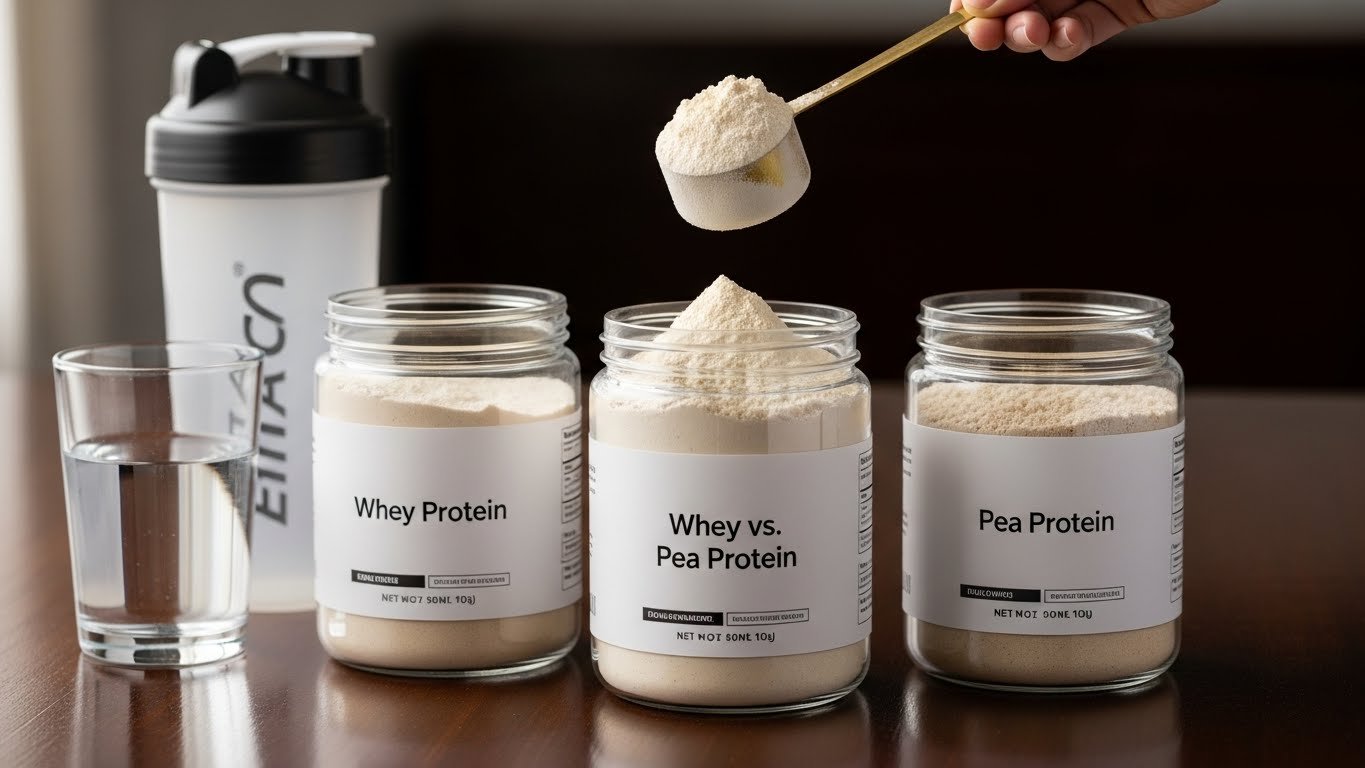
Introduction: The Foundation of Muscle
You can’t build a house without bricks. Protein is the raw material your body uses to construct muscle fibers, hormones, and enzymes.
While eating chicken and eggs is essential, it can be difficult to consume 150g+ of protein every single day just from whole foods. This is where Protein Powders become a strategic tool.
At Healthy.Azonpickr, we don’t believe in “magic powders.” We believe in science. This guide will break down the bioavailability, digestion rates, and amino acid profiles of the top protein sources so you can choose the one that fits your stomach and your goals—whether you are a bodybuilder, a vegan athlete, or simply looking to tone up.
Understanding the Main Players: Whey vs. Casein
When people talk about protein powder, they usually mean Wheyy (from milk). But there is another player in the game: Casein (also from milk). What is the difference?
The battle of Whey vs. Casein is one of the oldest debates in fitness nutrition. Both are milk-derived, but their biological properties are surprisingly different.Need to calculate your macros? Read our detailed guide
Table 1: Whey vs. Casein – The Breakdown
Use this table to see which one suits your lifestyle.
| Feature | Whey Protein | Micellar Casein |
|---|---|---|
| Digestion Speed | Very Fast (Absorbs in ~60 mins). | Slow (Can sit in stomach for hours). |
| Bioavailability | High (~99%) | Moderate (~94%) |
| Leucine Content | High (11%) | Moderate (~8.9%) |
| Best Timing | Post-Workout (30 mins) or Morning. | Any Time (Slow release). |
| Lactose Content | Very Low (1-4%) | Low (1-4%) |
| Cost | Moderate | Generally More Expensive |
| Best For | “The 1 Hour Window” (Anabolic). | Night Time / Before Bed. |
The Heavyweight Champion: Whey Protein
If you have walked through a supplement store or a gym nutritionist, you have seen the huge tub with the gold label: Gold Standard Whey. It is the king of protein powders.
1. What is it?
Whey is the liquid byproduct of cheese production. When rennet (cheese enzymes) are added to milk to make cheese, the remaining liquid is whey.
2. Hydrolysate vs. Isolate
Not all whey is created equal. The processing dictates the quality.
- Whey Concentrate: 80% protein, some fat/lactose. Cheaper. Good for smoothies.
- Whey Isolate: 90%+ protein, almost no fat/lactose. More expensive. Best for those who are lactose intolerant or want pure muscle growth.
- Hydrolysate: Enzymatically pre-digested. Fastest absorbing. Best for post-workout “The Anabolic Window.”
Recommendation: For the absolute best muscle growth, choose a Hydrolyzed Whey Isolate. It hits your bloodstream faster than any other source, ensuring your starving muscles get immediate repair material after your workout.Want to build muscle? Combine this powder with our Strength Training guide
The Nighttime Aid: Micellar Casein
While Whey is fast, Micellar Casein is slow. It is known as the “Time-Released Protein.”
Micellar casein particles are much smaller than Whey, taking about 3-5 hours to fully digest. This slow digestion creates a slow, steady trickle of amino acids into your bloodstream.
The Benefit: Sleeping on It
This is why Casein is often recommended for Night Time.
When you are asleep, your body is in repair mode. You don’t need quick amino acids (like Whey) immediately; you need a slow infusion to keep repair happening throughout the 8 hours you are in bed.
The Result: You wake up less catabolic (muscle breakdown). You maintain a positive nitrogen balance for longer.Read our Sleep guide to understand the importance of Nighttime recovery
Is Whey Right For You? (Sensitivity)
Many people believe they are “lactose intolerant” because dairy upsets their stomach. However, true lactose intolerance is a genetic inability to digest the sugar in milk (lactose), not just a sensitivity.
The Symptoms:
* Bloating and gas. * Stomach cramps. * Diarrhea.
If you experience these, don’t blame the protein powder. Blame the Isolate concentration. Isolate is virtually lactose-free.
Alternative: Whey Hydrolysate
As mentioned, Hydrolysate is pre-digested. It is usually 95% lactose-free. It hits the “middle ground” between Casein and Isolate. If you have a sensitive stomach, choose Hydrolysate Isolate.
The Vegan Choice: Plant-Based Protein
In the past, plant protein (pea, rice, soy) was considered “junk” for muscle building. It was low in Leucine (the trigger for muscle growth).
But technology has changed. Modern Pea Protein Isolates and Rice Protein are now so bioavailable that they rival Whey for muscle growth in human studies.
Leucine Content: The Key
Leucine is the specific amino acid that turns on MPS (Mammalian Target of Rapamycin), the signal to your body that says “Build Muscle!”
- Whey Protein: ~11% Leucine. Excellent for anabolic signaling.
- Casein: ~10% Leucine. Good, but slower release.
- Pea Protein Isolate: ~8-10% Leucine. Slightly lower, but fast digestion.
- Soy Protein: ~8% Leucine. Controversial, but effective.
- Rice Protein: ~8% Leucine. Hypoallergenic and highly bioavailable.
Recommendation: If you are vegan or dairy-sensitive, Pea Isolate or Rice Protein are your smartest choices. They provide excellent protein per scoop and generally cost less than Isolates.Need to lose weight but maintain muscle? Check out our Maintenance Weight Loss guide
The Hybrid Approach: Mixing It Up
Why choose? You can have it all.
Some people take Whey in the morning for fast delivery (Anabolic Window). They use Casein before bed (Anti-Catabolic Window).
You don’t have to choose one. You can mix powders into your shake to get the benefits of both.
The “Wake & Grow” Shake
- Scoop 1: Whey Isolate (Post-Workout).
- Scoop 2: Micellar Casein (Afternoon/Evening).
- Fluid: Water or almond milk.
- Optional: A handful of nuts for healthy fats.
Need meal ideas? Check out our Meal Prep guide for easy recipes
Table 2: Plant vs. Animal – Which Builds More Muscle?
Does animal protein really build more muscle than plant protein? The science is nuanced.
| Factor | Animal Protein (Whey/Casein) | Plant Protein (Pea/Rice/Soy) |
|---|---|---|
| Bioavailability (PDCAAS) | Very High (Easily absorbed). | High (Usually ~90%). |
| Leucine Content | High (8-11%) | Variable (Soy/Pea have less). |
| Complete Amino Profile | Complete Profile (High EAAs). | Incomplete (Low in Glycine/Serine). |
| Additional Nutrients | Contains Calcium, Vitamin B12, Zinc. | Lacks Micronutrients (Usually). |
| Insulin Index | Low (Does not spike blood sugar fast). | Low to Moderate (Faster emptying). |
Summary: Animal protein is generally superior for pure growth (Leucine/PDCAAS). However, for digestion, inflammation, or ethics, plant proteins are equal. Choose based on your needs.
Flavor, Texture, and Mixability
It doesn’t matter how complete the protein is if it tastes like chalk. You have to be able to drink it daily.
Chocolate Flavors
Chocolate Whey is delicious and masks the “milky” taste. However, chocolate contains added sugar and can reduce purity slightly. If you are dieting, stick to unflavored Vanilla or Strawberry.
Mixability with Liquids
A major complaint with powders is “clumping.”
The Fix: Mix your protein powder into a small amount of your chosen liquid (milk, almond milk, oat milk) to make a paste *before* you add it to the main liquid (water/shaker). This ensures a smooth, lump-free shake every time.Looking for recipes to mix your powder into? Check out our Snacking guide for healthy ideas
Choosing the Best Protein Powder: Buyer’s Checklist
Don’t just buy the tub with the coolest label. You need to read the label like a detective.
- Protein per Scoop: Aim for at least 24g. If a product has 20g per scoop and costs the same as one with 25g, the 25g is a better deal.
- Amino Acid Profile: Look for “BCAAs” or “EAAs.” This confirms the protein quality and completeness.
- Sweeteners: Avoid Aspartame, Sucralose, or artificial flavors. Natural sweeteners like Stevia or Monk Fruit are okay.
- Fillers: Avoid maltodextrin or other cheap fillers that bulk up the powder. They add empty carbs.
- Third-Party Testing: Look for the Informed Choice logo or “NSF Certified.” This ensures the product contains what the label says.
Read our full guide on Vitamins and Supplements to understand what else your body needs
Common Myths: Busted
Protein powders are surrounded by myths spread by marketing gurus.
- Myth 1: More Protein = More Muscle: False. Once you hit your daily target (e.g., 150g), consuming 300g won’t build extra muscle. Your body just excretes the excess.
- Myth 2: Powder is “Processed Food”: False. While concentrates undergo microfiltration, high-quality protein powder is a real, whole food. It is simply milk or peas, dried and ground.
- Myth 3: “Protein Farts”: This is a common joke, but true. Whey concentrate can cause bloating in some people. Switching to Isolate usually fixes this.
Conclusion: Fueling Your Gains
The “perfect” body is not made in the gym alone. It is built in the kitchen, 80% of the time.
Whether you choose Whey Isolate for that post-workout kick, Micellar Casein for sleep repair, or Pea Isolate for plant-based performance, the key is consistency.
Drink your shake. Hit your weights. Eat your real food. You have everything you need to build a stronger, leaner version of yourself.
Start Today.