

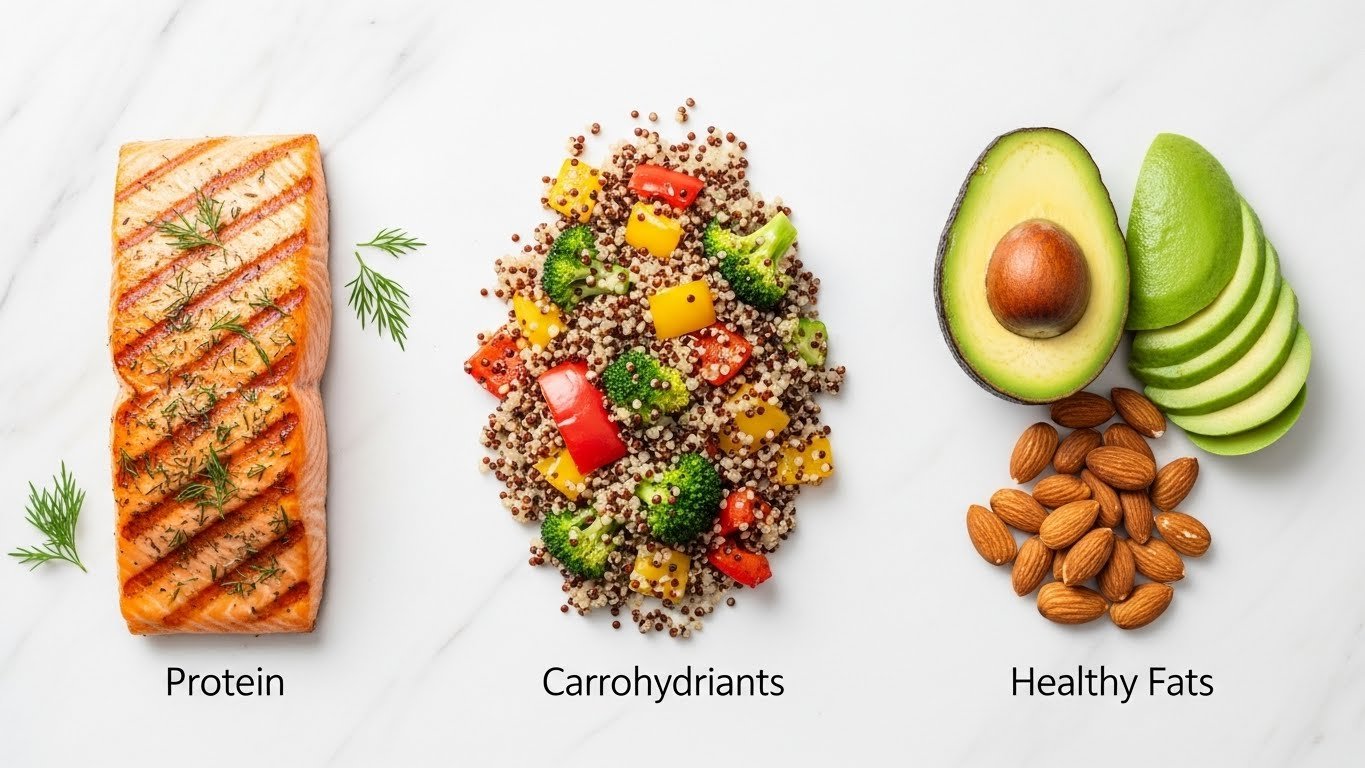
Introduction: Your Secret Key to Unlocking Body Composition Control
Have you ever meticulously followed a strict diet, only to feel starved, deprived, and ultimately disappointed with temporary or non-existent results? Do you look at athletes and fitness models and wonder how they fuel their incredible physiques while maintaining peak energy? The secret isn’t starvation; it’s about speaking your body’s language—the language of macronutrients, or “macros.”
In this definitive guide, we will demystify the science of macros. You will learn not just what they are, but how to use them as a powerful, precise tool to achieve any health and fitness goal you can imagine. Whether your objective is effective fat loss, lean muscle gain, or simply supercharging your daily energy and performance, this guide is your roadmap.
Forget the punishing, restrictive diets of the past. Welcome to the world of smart, flexible, and sustainable nutrition.
Chapter 1: What Are Macronutrients? The Foundational Principles
To master nutrition, you must first understand the basics. Think of macros as the primary fuel and raw materials your body operates on. They are the nutrients your body needs in “macro” (large) quantities to produce energy, facilitate growth, repair tissue, and maintain every single vital function.
Nearly every food you consume is composed of some combination of these three macronutrients. This is in contrast to micronutrients (vitamins and minerals), which your body requires in much smaller amounts but are equally essential for health. Macros, however, are what make up the caloric content of your diet.
Calories per Macro: The Core Concept
Understanding this simple breakdown is the cornerstone of macro tracking. Each gram of a macronutrient provides a specific number of calories:
| Macronutrient | Calories per Gram |
|---|---|
| Protein | 4 Calories |
| Carbohydrates | 4 Calories |
| Fat | 9 Calories |
As you can see, fat contains more than double the calories per gram compared to protein and carbohydrates. This doesn’t make fat “bad”; it simply means it is an incredibly dense energy source. This is a critical factor to consider when planning your meals and structuring your diet for fat loss or muscle gain.
Chapter 2: Protein – The Indispensable Building Block of the Body
Protein is far more than a post-workout shake for bodybuilders; it is the very foundation of life. Every single cell in your body, from your muscles and bones to your skin and hair, contains protein. It is the primary driver of tissue repair, growth, and cellular regeneration.
Why Is Protein So Crucial for Your Goals?
- Muscle Repair and Growth (Hypertrophy): When you exercise, especially with resistance training, you create microscopic tears in your muscle fibers. Protein provides the amino acids necessary to repair these tears, which in turn causes the muscle to grow back bigger and stronger. Without adequate protein intake, your efforts in the gym will be severely compromised.
- Satiety and Weight Management: Protein is the most satiating of the three macros. Including a sufficient protein source with each meal helps you feel fuller for longer. This significantly reduces cravings, prevents overeating, and makes it much easier to maintain a caloric deficit for fat loss.
- Thermic Effect of Food (TEF): Your body expends energy to digest and absorb the food you eat. Protein has the highest TEF, meaning your body burns approximately 20-30% of its calories simply through digestion. This gives your metabolism a natural boost.
- Hormone and Enzyme Production: Proteins are essential for creating the enzymes that catalyze thousands of chemical reactions in your body and the hormones that regulate everything from your mood to your metabolism.
How Much Protein Do You Actually Need?
Your ideal protein intake depends on your body weight, activity level, and specific goals:
- Sedentary Individuals: 0.8 – 1.2 grams per kilogram of body weight (or ~0.4-0.5g per pound).
- Active Individuals (Regular Exercise): 1.2 – 1.7 grams per kilogram of body weight (or ~0.6-0.8g per pound).
- For Optimal Muscle Gain or Fat Loss: 1.6 – 2.2 grams per kilogram of body weight (or ~0.7-1.0g per pound).
The Best High-Protein Food Sources
| Animal-Based Sources (Complete Proteins) | Plant-Based Sources |
|---|---|
| Chicken & Turkey Breast | Lentils, Chickpeas, and Beans |
| Fish (Salmon, Tuna, Cod) | Quinoa and Buckwheat |
| Lean Red Meat (Sirloin, Flank) | Tofu, Tempeh, and Edamame |
| Eggs & Egg Whites | Nuts and Seeds (Peanuts, Almonds) |
| Greek Yogurt & Cottage Cheese | Hemp Seeds and Chia Seeds |
| Whey & Casein Protein Powders | Plant-Based Protein Powders |

Chapter 3: Carbohydrates – The High-Performance Fuel
Carbohydrates have been unfairly demonized, but the scientific truth is they are your body’s preferred and most efficient energy source. They are the premium fuel that powers your brain, central nervous system, and high-intensity workouts. Completely eliminating carbs can lead to lethargy, brain fog, and poor athletic performance.
Simple vs. Complex Carbs: The Critical Distinction
The key to incorporating carbohydrates correctly is choosing the right type at the right time.
| Simple Carbohydrates | Complex Carbohydrates |
|---|---|
| Structure: Simple sugar molecules. | Structure: Long, complex chains of sugar molecules. |
| Digestion: Digested very quickly. | Digestion: Digested slowly and methodically. |
| Energy Release: Causes a rapid spike in blood sugar for immediate energy. | Energy Release: Provides a slow, sustained, and stable release of energy. |
| Examples: Table sugar, candy, soda, white bread, most fruits. | Examples: Oats, brown rice, quinoa, sweet potatoes, whole-grain bread, vegetables, legumes. |
The Golden Rule: Aim to get 80-90% of your carbohydrate intake from complex, fiber-rich sources. Simple carbs can be used strategically, especially around your workouts, to provide a quick energy source for performance and to rapidly replenish glycogen stores afterward.
Strategic Carb Timing for Maximum Performance and Recovery
- Pre-Workout (1-2 hours prior): A meal rich in complex carbs will provide the sustained energy needed to power through a tough training session.
- Post-Workout (within 2 hours): Consuming a mix of simple and complex carbs along with protein is crucial. This combination kickstarts the recovery process by replenishing depleted muscle glycogen stores and shuttling amino acids into the muscle cells for repair.
Chapter 4: Dietary Fats – The Essential and Misunderstood Nutrient
Fat is not the enemy. In fact, dietary fat is absolutely essential for survival and optimal health. It plays vital roles that no other nutrient can fulfill. The problem has never been fat itself, but rather the type and quantity of fat consumed.
The Non-Negotiable Roles of Dietary Fat:
- Hormone Production: Fats are the building blocks for crucial steroid hormones, including testosterone and estrogen. Chronically low-fat diets can lead to serious hormonal imbalances.
- Vitamin Absorption: Fat-soluble vitamins—A, D, E, and K—cannot be absorbed by your body without the presence of dietary fat in a meal.
- Brain Health: Your brain is nearly 60% fat. Essential fatty acids like Omega-3s are critical for cognitive function, memory, mood regulation, and protecting against neurodegenerative disease.
- Energy Source: For low-intensity activities and at rest, fat is a primary and long-lasting energy source.
The Hierarchy of Fats: The Good, The Bad, and The Ugly
| Type of Fat | Health Impact & Sources |
|---|---|
| Unsaturated Fats (The Good) | The cornerstone of your fat intake. Found in olive oil, avocados, nuts (almonds, walnuts), seeds (flax, chia), and fatty fish (salmon). They are excellent for heart and brain health. |
| Saturated Fats (The Limit) | Found in animal products like red meat, butter, and full-fat dairy. Not inherently evil, but should be consumed in moderation as part of a balanced diet. |
| Trans Fats (The Ugly) | Avoid at all costs. Artificially created fats found in processed foods, commercial baked goods, and fried items. They offer no health benefits and are directly linked to heart disease and inflammation. |
Chapter 5: Your Step-by-Step Guide to Calculating Personal Macros
This is where the theory becomes practice. Follow these five steps to calculate your unique macro targets.
Step 1: Calculate Your Basal Metabolic Rate (BMR)
Your BMR is the number of calories your body burns at complete rest. The Mifflin-St Jeor formula is widely considered the most accurate:
- For Men:
(10 × weight in kg) + (6.25 × height in cm) - (5 × age in years) + 5 - For Women:
(10 × weight in kg) + (6.25 × height in cm) - (5 × age in years) - 161
Step 2: Determine Your Total Daily Energy Expenditure (TDEE)
Your TDEE is your BMR plus the calories you burn from all daily activity. Multiply your BMR by the appropriate activity factor:
| Activity Level | Multiplier |
|---|---|
| Sedentary (desk job, little to no exercise) | BMR x 1.2 |
| Lightly Active (light exercise/sports 1-3 days/week) | BMR x 1.375 |
| Moderately Active (moderate exercise 3-5 days/week) | BMR x 1.55 |
| Very Active (hard exercise 6-7 days/week) | BMR x 1.725 |
| Extra Active (very hard exercise/physical job) | BMR x 1.9 |
Step 3: Set Your Daily Calorie Goal
Your TDEE is your maintenance calorie level. Adjust from here based on your primary goal:
- For Fat Loss (Caloric Deficit): Subtract 300-500 calories from your TDEE.
- For Weight Maintenance: Eat at your TDEE level.
- For Muscle Gain (Caloric Surplus): Add 250-400 calories to your TDEE.
Step 4: Establish Your Macro Split (Ratios)
These are excellent starting points. You can adjust them later based on your results and preferences.
| Goal | Protein % | Carbohydrate % | Fat % |
|---|---|---|---|
| Fat Loss | 40% | 30% | 30% |
| Maintenance | 30% | 40% | 30% |
| Muscle Gain | 30% | 45% | 25% |
Step 5: Convert Ratios to Grams (A Practical Example)
Let’s assume your daily calorie goal is 2,200 calories and you’re aiming for fat loss (40P/30C/30F).
- Protein:
2,200 calories × 0.40 = 880 calories from protein880 calories ÷ 4 (cals/gram) = **220g of Protein**
- Carbohydrates:
2,200 calories × 0.30 = 660 calories from carbs660 calories ÷ 4 (cals/gram) = **165g of Carbohydrates**
- Fat:
2,200 calories × 0.30 = 660 calories from fat660 calories ÷ 9 (cals/gram) = **73g of Fat**
Your daily target becomes: 220g Protein, 165g Carbs, and 73g Fat.
Chapter 6: IIFYM (If It Fits Your Macros) and The Art of Flexible Dieting
IIFYM, also known as flexible dieting, is a nutritional philosophy stating that you can eat any food you desire, as long as it “fits” within your daily macronutrient and calorie targets.
This is not a license to eat junk food all day. The most effective application of IIFYM is the 80/20 Rule:
- 80% of your calories should come from whole, nutrient-dense, minimally processed foods. (The sources listed in the tables above).
- 20% of your calories can be allocated to more indulgent “fun” foods you enjoy (a slice of pizza, a scoop of ice cream, a piece of chocolate).
This balanced approach fosters long-term adherence by eliminating the “good food vs. bad food” mentality. It removes guilt, accommodates social events, and makes healthy eating a sustainable lifestyle rather than a temporary punishment.
Chapter 7: Frequently Asked Questions (Macros FAQ)
1. Do I need a food scale to track macros?
Initially, yes. A digital food scale is your most important tool for learning what portion sizes actually look like. Guessing is highly inaccurate. After a few months of consistent tracking, you will develop a “caloric intuition” and can be more flexible.
2. What about alcohol? How do I track it?
Alcohol contains 7 calories per gram. It is its own macronutrient, though not essential. To track it, you can subtract its calories from your daily carbohydrate or fat allowance. For example, a drink with 140 calories could be logged as 35g of carbs (140/4) or ~15g of fat (140/9).
3. Do I need to track non-starchy vegetables?
For the most part, no. Green, fibrous vegetables like broccoli, spinach, lettuce, and cucumbers are so low in calories and rich in micronutrients that you can eat them freely. Starchy vegetables like corn, peas, and potatoes should be weighed and tracked.
4. What happens if I go over on one macro but am under on another?
Don’t panic. The most important variable for weight management is your total daily calorie intake. The second most important is your total daily protein intake. While hitting all three macros is ideal, focus first on hitting your calorie and protein goals. Consistency over an entire week is far more important than perfection in a single day.
Conclusion: You Are Now in Control
Understanding and applying the principles of macronutrients is not just another “diet.” It’s a fundamental shift in your relationship with food. It empowers you to become the architect of your own body, fueling your performance and achieving your goals with precision and flexibility.
You now possess the knowledge to take complete control of your nutrition. Use this guide as your trusted reference, be patient and consistent in your application, and enjoy the transformative journey to a stronger, healthier, and more confident version of yourself. Your future self will thank you. The journey starts now.