

Introduction: The Shock of the Stats
Every morning, millions of Americans wake up and look at their wrist. A number flashes on their screen: 10,000 steps. We see “Goals Met,” “Active Zones,” and we feel a rush of dopamine. We tell ourselves: “I’m doing it.”
But what is that number really? Is 10,000 steps a guarantee of health? Is it enough to combat our sedentary office jobs? Or are we being sold a “Fit” fantasy by big tech companies?
At Healthy.Azonpickr, we go deep into the data. We analyze guidelines, actual physical activity levels, and the difference between “guidelines” (what we *should* do) and “real life” (what we *actually* do).
This guide will challenge your perceptions, give you real benchmarks, and help you determine if your fitness tracker is lying to you or actually motivating you.
The Guidelines vs. The Reality
For years, the Center for Disease Control (CDC) has preached a simple message: “Get at least 150 minutes of moderate-intensity aerobic activity per week.”
The Guideline: 7 days x ~22 minutes/day = 154 minutes/week.
150 minutes is great for heart health, but is it enough for modern obesity? 150 minutes of walking might burn 1,000 calories. A single slice of pizza is 300 calories. You can undo your 30-minute walk in three bites.
Table 1: Guidelines vs. Real Life
Let’s compare what the government suggests versus what real life looks like.
| Factor | The CDC Guideline | Real Life (USA Avg) | The Gap | |
|---|---|---|---|---|
| Intensity Focus | Moderate (Brisk Walking) | Light Activity (Daily Chores) | Sedentary (Office/Car) | ⚠ Problem: High Blood Pressure Risk |
| Weekly Duration | 150 Minutes Total | ~20 Minutes Daily (Total) | ~15 Minutes Daily (Total) | ⚠ Problem: Weight Gain & Metabolic Slowdown |
Takeaway: The guidelines are a *minimum* bar for health, not an optimal goal for weight loss. Real life is often less active than “Light Activity,” meaning many people are technically meeting the guideline while sitting for 12 hours a day.Check your heart rate zone. Are you actually in the “Cardio Zone” (Zone 2)? Read our Guide to HIIT for intensity analysis
Perhaps the most interesting modern trend is the “Weekend Warrior.” You have seen them—people who are sedentary Monday through Friday, then hit the gym hard on Saturday and Sunday.
At Healthy.Azonpickr, we analyze this trend critically. Is it healthy? Or is it a recipe for injury?
1. The Physical Benefit
Squeezing a week’s worth of activity into 2 days prevents health issues. It burns calories. It feels satisfying.
2. The Sedentary Shock
However, if you spend 5 days sedentary (mostly sitting), your body stiffens up. Your insulin sensitivity increases. Your joints lock up. Come Monday morning, you feel old, stiff, and lethargic.
Many experts link this to the “Monday Morning Blues” and higher injury rates.Struggling with motivation? Our Stress Management guide helps you find consistency without burnout
The Data: What Do Americans Really Do?
We love trackers. We love seeing the “Green Zone” on our Apple Watch. But let’s look at the cold hard data of the average American adult.
According to the National Health Interview Survey (NHIS) and CDC physical activity data:
- The Average Steps: ~5,000-7,000 steps per day. (Depends on job type).
- The “Active” Percentage: Only about 20-25% of adults meet the guideline (150 mins/week).
- Sedentary Behavior: Americans sit for an average of 7-10 hours per day.
The Reality: If only 1 in 4 Americans is meeting the guideline strictly, then 75% are failing. This matches the obesity crisis curve.Need to burn more calories? Strength training is the key. It keeps your metabolism elevated even at rest. Read our Strength Training guide

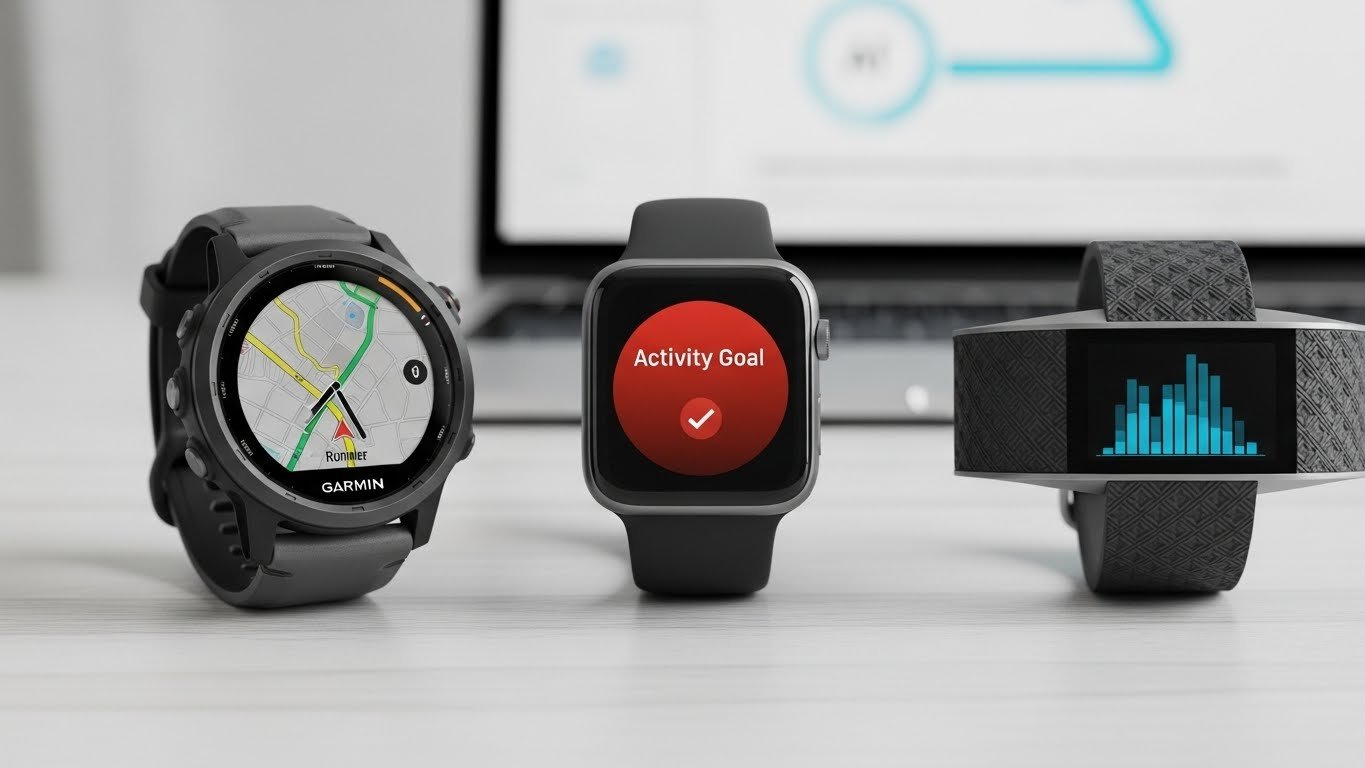
The Tech War: Apple Health vs. Fitbit vs. Strava
The device on your wrist dictates your mindset. But is your device accurate?
1. Apple Health (The Gold Standard)
Apple’s ecosystem is massive (Watch, iPhone, iPad). Their HealthKit API is considered the industry standard for research.
The Bias: Apple Health tends to prioritize steps and heart rate. It is designed for general wellness (walking, stairs). It might undervalue high-intensity bursts like lifting heavy weights or sprinting.
2. Fitbit & Garmin (The Athletes)
Dedicated fitness trackers (Fitbit, Garmin) use sensors that calculate calories burned and active minutes with high precision.
The Bias: They tend to overcount “Active Calories” (Metabolic Equivalence of Tasks – METs). They might tell you that washing dishes burned 50 calories when it actually burned 15.
3. Who Wins?
If your goal is weight loss, a pedometer that overestimates activity can trick you into eating less. However, if your goal is athletic performance, a high-end fitness tracker (Garmin) is superior.
Looking for hardware? Check out our Home Fitness guide for recommendations
How Many Steps Do You Actually Need?
10,000 steps is the default goal for almost everyone. But is it necessary?
The origin of the 10,000-step goal comes from Japanese marketing in the 1960s (Manpo-kei pedometer), not science.
The Step Count:
- Goal: 150 minutes of moderate activity/week.
- Equivalent: Roughly 7,000-8,000 steps/day for average walking speed.
- The “Active Zone”: This is what Apple Health rewards. It keeps you in the loop.
- Intensity: To burn significant fat, 15,000 steps isn’t enough. You need to walk fast enough to reach 60-70% Max Heart Rate.
The Verdict: For general health, 10,000 steps is fantastic. But if you are trying to lose serious weight, you are likely in the “Weight Maintenance” zone (Zone 3), not the Cardio Zone. You need to exercise with intention, not just movement.Want to boost your step count without walking? Check out our Yoga guide for focus and flexibility
We love “Active Minutes.” It feels good. It feels productive. We can listen to a podcast while walking the dog.
But from a metabolic standpoint (weight loss), “Light Activity” is dangerous.
If your job, chores, and walking add up to 150 minutes (20 mins/day), and you only burn 200-300 calories above your BMR… You will lose weight extremely slowly. It might take months to notice a scale change.
The Solution:
- Introduce “Intentional Exercise”: You need to move with purpose. Lift weights, run, or cycle. This creates a “Metabolic Debt” that keeps you burning calories while you sleep (afterburn effect).
- Don’t rely on NEAT: Non-Exercise Activity (NEAT) is unreliable. It’s a bonus, not the main driver. Focus on exercise intensity first.
- Use Trackers Correctly: Don’t count a 20-minute casual walk as 20 minutes of exercise. Many trackers now allow you to differentiate between the two (e.g., Apple Health). Use this feature honestly.
—
Strategies for the Desk Warrior
Most of our readers are not athletes; they are professionals in the “Active” sector (Office Jobs).
1. The “Snackercise” Strategy
You don’t have to sit for 60 minutes straight.
The Method:
* Work for 25 mins.
* Take a 5-minute “Snack Break”: Walk briskly around the block.
* Return to work.
* Repeat for 8 hours.
The Benefit: You break up “Sedentary Time,” reduce insulin spikes, and keep metabolism higher than sitting continuously. You have burned extra calories without spending “gym time.”
2. NEAT (Non-Exercise Activity) Maximization
If you can’t exercise due to time, NEAT is your friend. But maximize it.
| Activity | MET Value (Calories/Hour) | Burned in 1 Hour (for 150 lb person) | |
|---|---|---|---|
| Standing Desk Work | 1.5 MET | ~105 | ~100 |
| Brisk Walking (3.5 mph) | 4.3 MET | ~300 | ~300 |
| Fidgeting / Pacing | 2.8 MET | ~195 | ~195 |
Insight: Notice that “Fidgeting” burns nearly double the calories of “Brisk Walking.” If you can’t leave your desk, pace back and forth while you talk. It adds up to hundreds of calories over a day.Need a desk workout plan? Check out our Home Fitness guide for routines you can do in the office
Conclusion: The Verdict on American Fitness
Are Americans exercising enough? The data says: No, not really.
We are a nation of “Guidelines Met” (bare minimum) but “Lifestyle Reality” (mostly sedentary). We love our 10,000 step badges, but we must be honest: Walking isn’t enough to change a physique or drop significant weight.
The Ultimate Prescription:
- Aim Higher: Move beyond “Light Activity.” Hit 8,000 steps if you can, but push into Zone 2 or 3 for 20 minutes.
- Diversify: Don’t just walk. Lift weights (Strength Training), do Yoga (Flexibility), or run (Cardio).
- Use Tech Wisely: Use your tracker for motivation and data, not as a crutch. Let it help you push harder, not justify laziness.
- Reduce Sedentary Time: Even if you run for 30 minutes, if you sit for 9 hours a day, you are effectively canceling out your metabolic boost.
Stop settling for the “Green Zone.” Stop being a Weekend Warrior. Build a body that thrives on movement, not just on step count.
True fitness is functional capability. Go today.