

Introduction: The Battle Against the Bulge
If you are reading this, you have probably felt the frustration. You’ve tried the crunches, the ab machines, and the detox teas. You might have even dropped ten pounds on the scale, yet that stubborn layer of fat around your midsection refuses to budge.
You are not alone. Belly fat is not only the most common complaint among men and women; it is also the most dangerous.
At Healthy.Azonpickr, we believe in transparency. We are going to stop the “magic pill” narrative right now. To lose belly fat, you need to understand your biology. This guide is a comprehensive, 2000-word deep dive into the hormones that dictate fat storage, the foods that silently pack on pounds, and the proven workout strategies to carve out the six-pack hiding beneath.
The Science: Decoding Your Body Fat
Before we pick up a dumbbell or put down a fork, we must identify the enemy. Many people think fat is just fat. This is incorrect. The fat on your belly is physiologically distinct from the fat on your thighs or arms.
Subcutaneous Fat:
This is the “soft” fat. It sits right under your skin. It’s the stuff you can pinch between your fingers. While annoying from a cosmetic standpoint, subcutaneous fat is relatively harmless metabolically.
Visceral Fat:
This is the silent killer. Visceral fat is the “hard” fat stored deep within your abdominal cavity, wrapping around your internal organs (liver, pancreas, and intestines). It pushes your stomach out, creating the dreaded “beer belly” or “muffin top.”
Why is Visceral Fat dangerous?
It is metabolically active. It doesn’t just sit there; it releases inflammatory markers (cytokines) and free fatty acids into your bloodstream. This leads to insulin resistance, high blood pressure, and increases your risk of Type 2 Diabetes and Heart Disease.
The good news? Because visceral fat is metabolically active, it is often the first fat to go when you start a diet and exercise program. You just have to trigger the right metabolic switches.
The Hormonal Triggers: Why You Store Fat on Your Belly
Why does the body choose the stomach? It’s usually hormonal. Here are the four main hormones dictating your waistline:
1. Insulin (The Storage Hormone):
When you eat carbohydrates (especially refined carbs like bread, pasta, and sugar), your blood sugar spikes. Your pancreas releases Insulin to lower it. However, Insulin also signals your body to stop burning fat and start storing it. Chronically high insulin levels = guaranteed belly fat.
2. Cortisol (The Stress Hormone):
When you are stressed—whether from work, financial issues, or lack of sleep—your body pumps out Cortisol. Evolutionarily, Cortisol prepares your body for “fight or flight.” It tells your body to store energy in the most accessible place: the belly, so you have quick fuel to run from danger. This creates the “Stress Belly.”
3. Leptin (The Satiety Hormone):
This hormone tells your brain “I’m full.” Excessive visceral fat can cause “Leptin Resistance.” Your brain stops hearing the signal, causing you to overeat constantly.
4. Ghrelin (The Hunger Hormone):
The enemy of willpower. If you are tired, Ghrelin spikes. High Ghrelin + High Stress = Insatiable cravings for sugar and fat.

Nutrition Strategy: Eating for a Flat Stomach
You cannot out-train a bad diet. They say “Abs are made in the kitchen” for a reason. To lose belly fat, we need to lower insulin and reduce inflammation.
1. The Power of Protein
Protein is the most important macronutrient for fat loss. It has a high “Thermic Effect,” meaning your body burns more calories digesting protein than carbs or fats. It also suppresses Ghrelin.
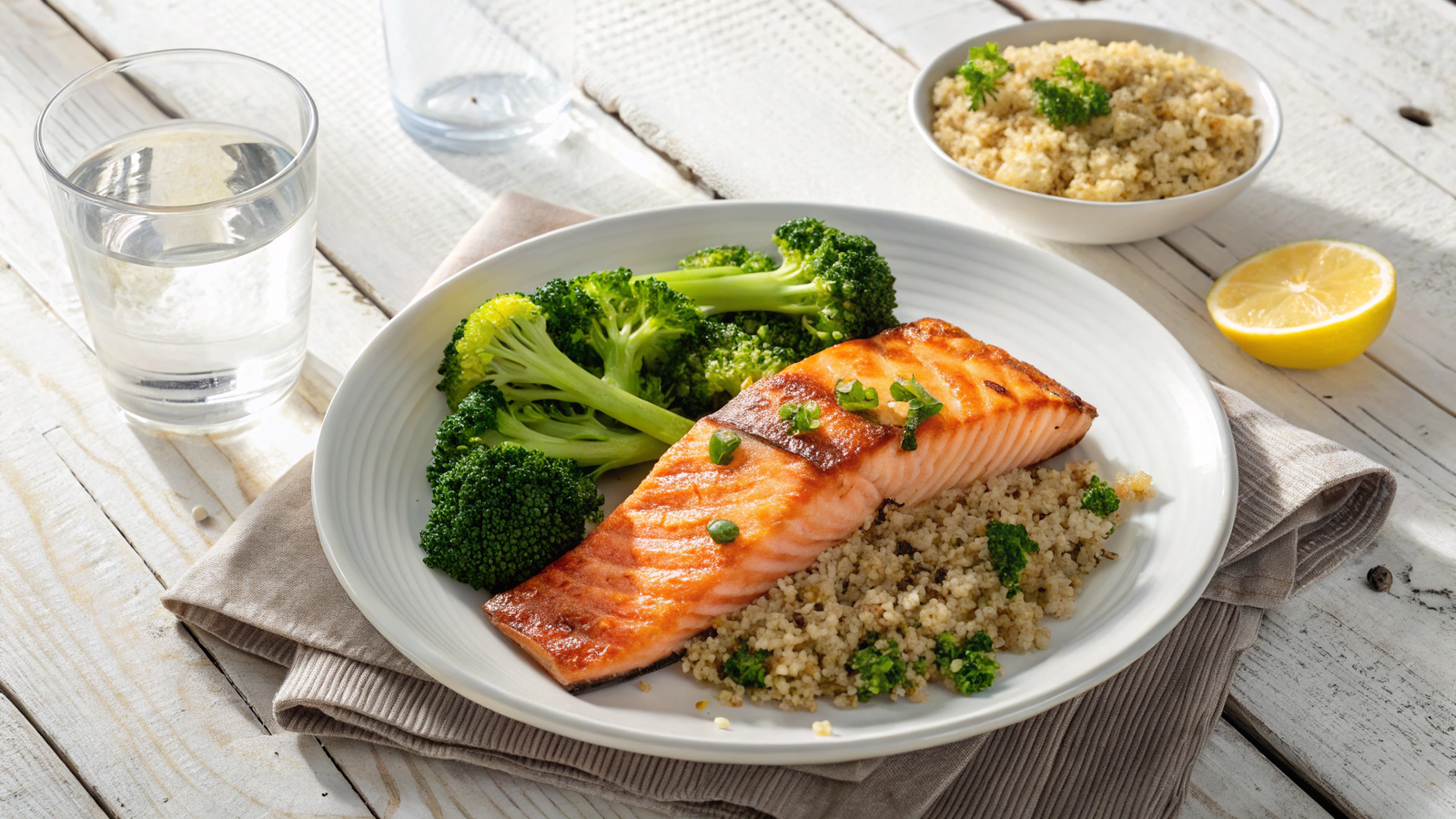
Aim for 30 grams of protein at every meal. Examples: Chicken breast, salmon, Greek yogurt, eggs, or plant-based sources like tofu and quinoa.
2. Cutting the White Carbs
White flour, white sugar, and white rice are essentially pure glucose. They spike insulin violently. Switch to complex carbohydrates: oats, brown rice, sweet potatoes, and legumes. These digest slowly, keeping insulin stable.
3. The Role of Fiber
Soluble fiber absorbs water and forms a gel that slows down food as it passes through your digestive system. This makes you feel full longer. A landmark study found that increasing soluble fiber intake by 10 grams per day reduced visceral fat gain by 3.7%.
Best sources: Flaxseeds, avocados, blackberries, and Brussels sprouts.
Table 1: Foods That Burn vs. Foods That Store Belly Fat
| Fat-Burning Allies (Eat This) | Why It Works | Belly-Bloating Enemies (Avoid) |
|---|---|---|
| Soluble Fiber (Oats, Flax) | Reduces appetite and visceral fat storage. | Trans Fats (Fried food, Donuts) |
| Fatty Fish (Salmon, Tuna) | Omega-3s reduce inflammation and stress. | High Fructose Corn Syrup |
| Green Tea | Contains EGCG to boost metabolism. | Excess Alcohol (Beer, Liquor) |
| Apple Cider Vinegar | Lowers blood sugar spikes by up to 30%. | Soda & Energy Drinks |
Need a full breakdown of weight loss principles? Read our comprehensive guide
Exercise Strategy: Cardio + Strength + Core
To lose belly fat, you need a three-pronged attack.
1. The Magic of HIIT (High-Intensity Interval Training)
Low-intensity cardio (like walking) is good for recovery, but if you want to burn fat fast, you need HIIT. HIIT involves short bursts of all-out effort followed by rest.
Why it works: It triggers “EPOC” (Excess Post-exercise Oxygen Consumption). This means your body burns calories at an elevated rate for up to 24 hours after you finish the workout.
Example HIIT Workout:
– Sprint for 30 seconds.
– Walk for 60 seconds.
– Repeat for 15 minutes.
2. Compound Movements vs. Isolation
Stop wasting hours doing sit-ups. Sit-ups only work the superficial ab muscles. To burn calories, you need big movements. Squats, deadlifts, and lunges use half the body’s musculature. They spike your heart rate and metabolism far more than crunches.Master the squat, deadlift, and other compound movements with our Home Fitness guide
3. Core Stabilization
Once you have burned the fat, you want to reveal the muscle. Focus on stabilization exercises like Planks and Ab Wheels. These tighten the deep core “corset” muscles.
Table 2: The Ultimate Belly Fat Shred Workout Plan (4 Weeks)
| Day | Activity | Intensity/Details |
|---|---|---|
| Monday | Full Body Strength | Squats, Pushups, Rows (45 mins) |
| Tuesday | HIIT Cardio | Sprint Intervals / Tabata (20 mins) |
| Wednesday | Active Recovery | 30-40 min Brisk Walk (Low cortisol) |
| Thursday | Full Body Strength | Dumbbells, Lunges, Overhead Press |
| Friday | HIIT + Core | 20 mins HIIT + Planks/Leg Raises |
| Saturday | Steady State Cardio | 45-60 mins Jogging (Fat burning zone) |
| Sunday | Rest & Meal Prep | Yoga / Light Stretching |
The Hidden Factor: Sleep and Stress Management
If you are eating right and training hard but the scale is stuck, look at your lifestyle.
The Sleep-Fat Connection:
A study in the *American Journal of Clinical Nutrition* found that dieters who slept 5.5 hours lost 55% less fat than those who slept 8.5 hours. Why? Sleep deprivation raises Ghrelin (hunger) and lowers Leptin (fullness). You are fighting biology every morning.
Managing Cortisol:
You cannot eliminate stress, but you can manage it.
– Morning Sunlight: Get 10 minutes of sun in your eyes immediately upon waking to reset circadian rhythm.
– Mindful Eating: Turn off the TV while eating. Distraction leads to overeating.
– Limit Caffeine: Stop coffee after 2:00 PM to protect sleep quality.Sleep is the foundation of health. Dive deeper into the science here
The Role of Gut Health
Emerging science suggests that your microbiome (gut bacteria) plays a role in obesity. People with a diverse gut microbiome tend to be leaner. Those with an imbalance of bacteria (Dysbiosis) tend to absorb more calories from food.
How to fix your gut:
1. Eat probiotics: Yogurt, kefir, kimchi, sauerkraut.
2. Eat prebiotics (Fiber): Feed the good bacteria with onions, garlic, and leeks.
3. Limit artificial sweeteners: Splenda and Aspartame can kill good gut bacteria.
Supplements: What Works and What Doesn’t?
Don’t waste money on “Belly Fat Burner” pills. They are mostly caffeine and diuretics (water pills).
Effective Supplements (Natural):
1. Green Tea Extract: Proven to boost metabolic rate.
2. Fiber Supplements (Glucomannan): Expands in the stomach to make you full.
3. Apple Cider Vinegar: One tablespoon before a meal can reduce the glycemic index of your food.
Fasting Protocol:
Intermittent Fasting is a powerful tool to lower insulin and tap into fat stores. By restricting your eating window (16:8), you control the hormones responsible for belly fat.Learn exactly how to start fasting safely
Troubleshooting: Why You’re Stuck
Are you doing everything right but nothing is happening? Check these three things:
1. You are tracking calories incorrectly:
Are you weighing your food? Most people underestimate their intake by 50%. Get a digital kitchen scale.
2. You are drinking your calories:
Lattes, sodas, juices, and alcohol pack on pounds without filling you up. One margarita can have as many calories as a meal. Switch to water, black coffee, and tea.
3. You are eating “Healthy” but caloric foods:
Nuts, avocados, and olive oil are healthy, but extremely calorie-dense. Measure them!
Conclusion: The Marathon, Not the Sprint
Losing belly fat is hard. It is the last place your body gives up fat. It requires discipline in the kitchen, sweat in the gym, and patience in the mirror.
But it is possible. Focus on the process, not the mirror. Focus on how your clothes fit, your energy levels, and your health markers (blood pressure, cholesterol).
Follow the tables in this guide. Eat for your hormones. Move for your metabolism. The six-pack is underneath the layers. It is waiting for you to reveal it. Start your journey today.